Can You Remove a Wall in Your Home? What to Know Before You Start
March 26, 2026
March 26, 2026
Few changes can transform a home quite like opening up the space between rooms. Removing a wall can allow light to move more freely, create a stronger connection between living areas, and make a home feel both more expansive and more welcoming.
It’s no surprise that many homeowners consider this step when planning a remodel. But before a wall comes down, it’s important to understand what role it plays within the home itself. Some walls simply divide spaces, while others quietly support the structure that holds everything together.
Knowing the difference is the first step toward making thoughtful and lasting design decisions.
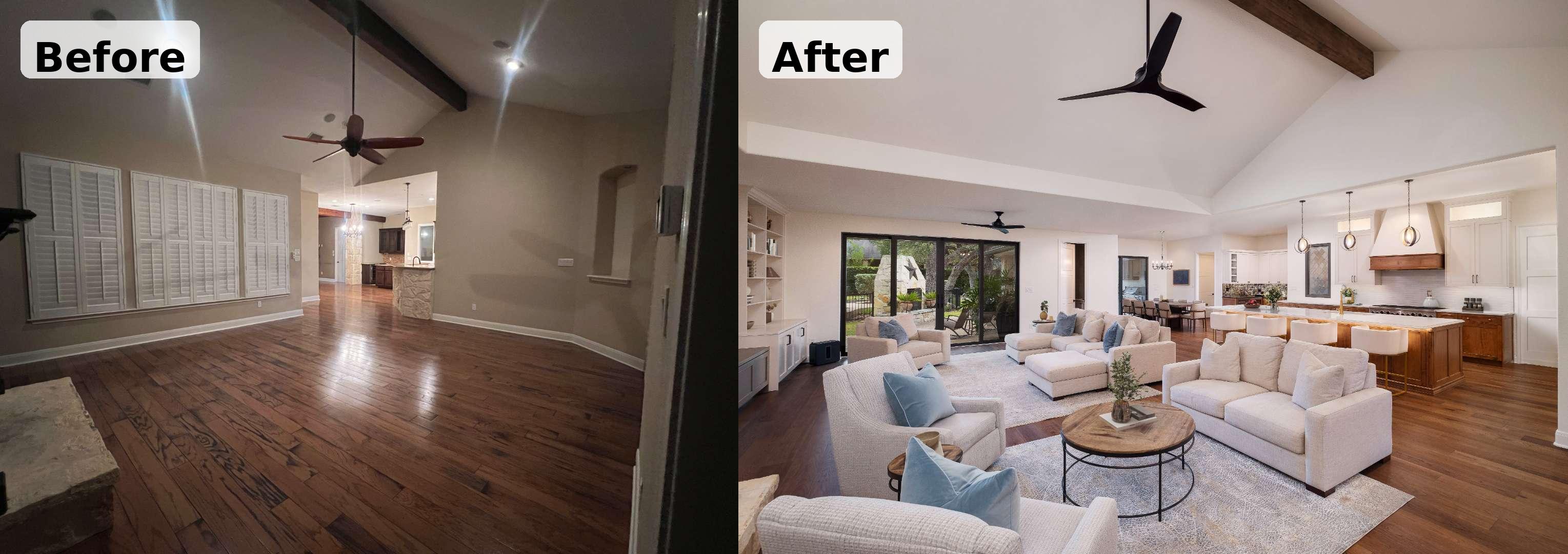
Every home is built with a framework designed to carry weight safely from the roof down to the foundation. Within that framework, certain walls are responsible for supporting floors, ceilings, or roof structures. These are often referred to as load-bearing walls.
Other walls serve a different purpose. They help define rooms, create privacy, and shape the layout of the home without carrying structural weight.
While non-structural walls can sometimes be removed more easily, structural walls require careful planning. With the right design approach, however, even these walls can often be opened up while maintaining the integrity of the home.
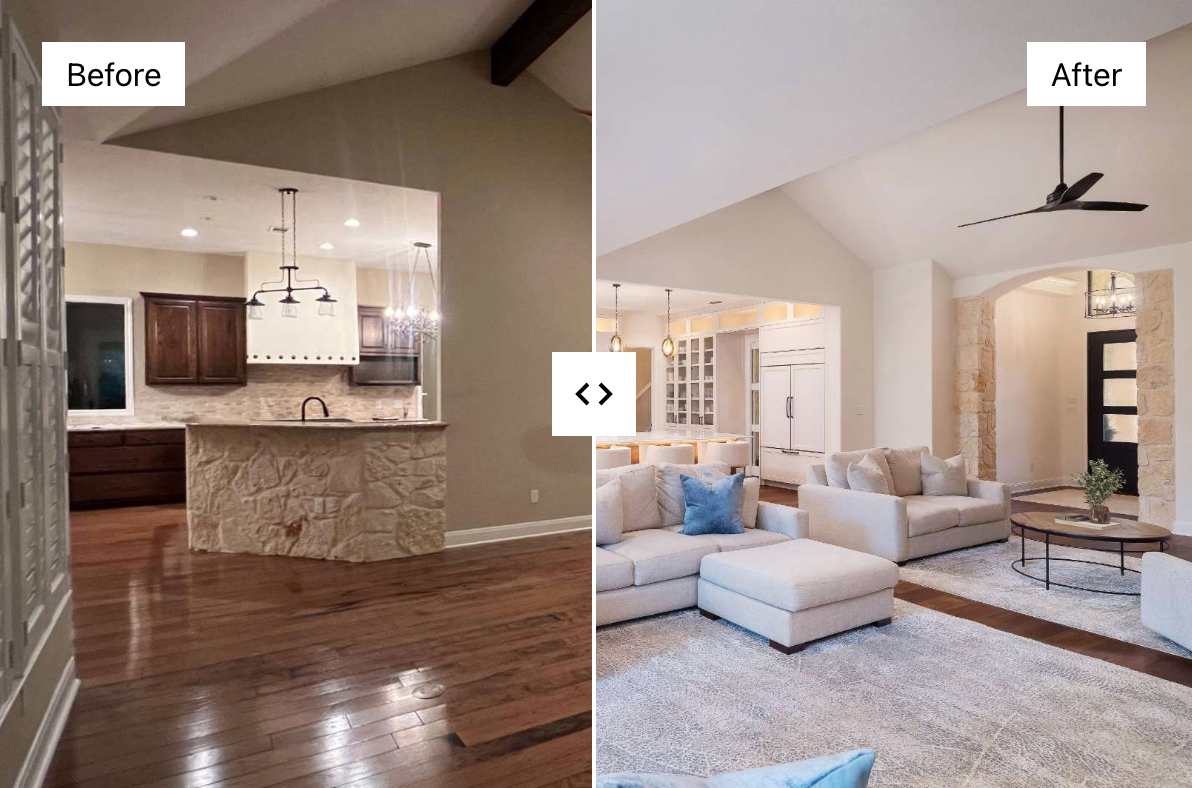
Determining whether a wall is load-bearing isn’t always obvious at first glance. Homes evolve over time, and previous renovations may have altered the original structure.
That said, there are a few clues that can suggest a wall may be playing a structural role. A wall may be supporting weight if it:
These indicators can offer helpful hints, but they are only part of the picture. A professional evaluation is the best way to fully understand what lies behind the surface.
For many homeowners, the encouraging news is that even structural walls can often be modified. With the guidance of design and engineering professionals, a wall may be replaced with a beam that safely redistributes the weight of the structure.
This allows for the openness many homeowners envision, whether that means connecting a kitchen to a living space or creating wider sightlines through the home.
Behind the scenes, this process involves structural planning, engineering calculations, and careful installation. When done properly, the result feels seamless, an open space that appears as though it was always meant to be that way.
Walls often contain more than framing alone. Electrical wiring, plumbing lines, insulation, and HVAC systems may all be tucked inside.
Because of this, removing a wall requires thoughtful coordination. Each of these systems must be carefully evaluated and, if necessary, relocated so that the home continues to function smoothly once the work is complete.
Taking the time to plan these details ahead of construction helps ensure the remodel unfolds with clarity rather than surprises.
When thoughtfully designed, removing a wall can reshape the experience of a home. Spaces begin to flow together more naturally. Natural light travels deeper into the interior. Gathering areas feel more connected and inviting.
At CROSS, these transformations begin with careful listening and a deep respect for the homes entrusted to us. By understanding both the structure of the house and the vision of the homeowner, our team helps reveal what is possible, balancing design inspiration with structural integrity.
Because the most beautiful homes are not simply opened up.They are thoughtfully reimagined, with care in every detail.
Can you remove a wall in your home? Learn how to tell if a wall is load-bearing and what to consider before remodeling.


